
biceps
Incline Dumbbell Curl
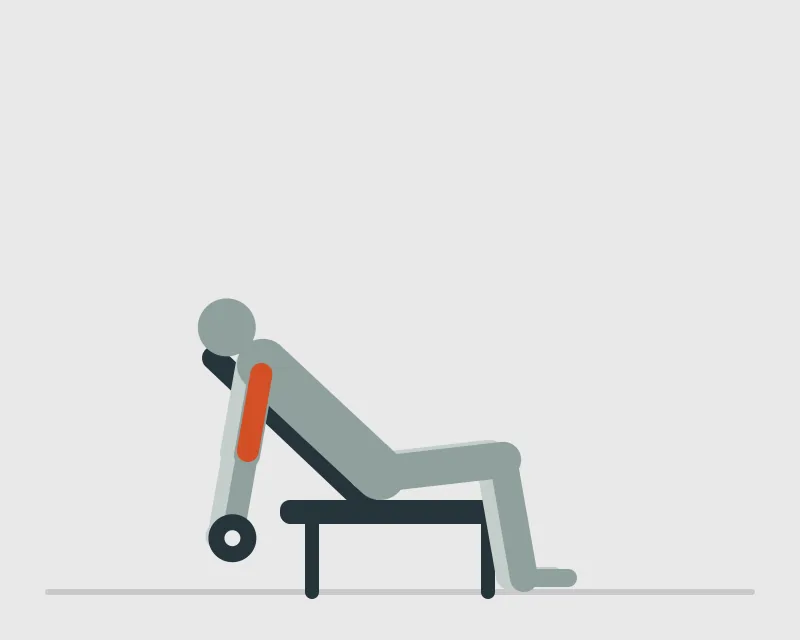
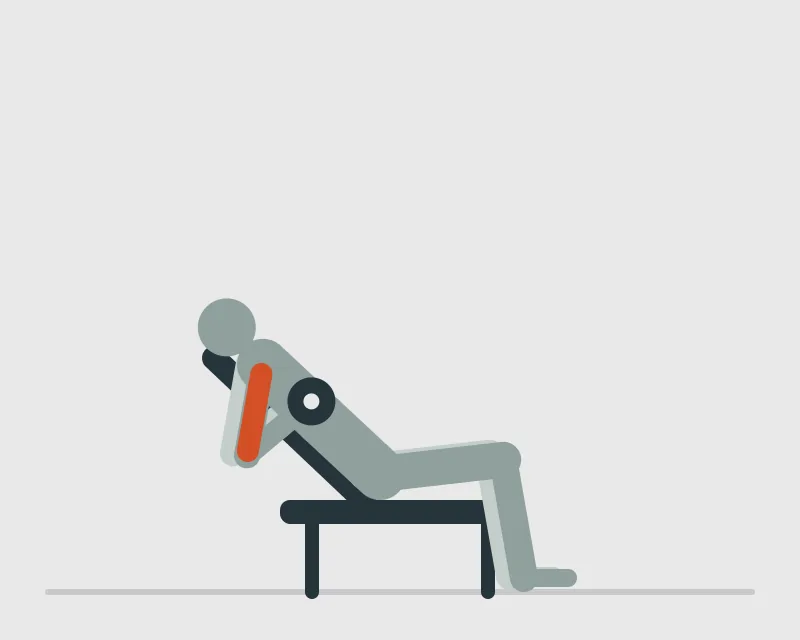
Lying back on an incline bench with your arms hanging behind you, you curl dumbbells. The stretched start works the biceps through a longer range.
beginnerdumbbellsincline bench
BEFORE YOU START2
- Set the bench to between 45 and 60 degrees.
- Pick lighter dumbbells than you use for a standing curl.
HOW TO DO IT
Get into position
- Sit back against the bench with a dumbbell in each hand.
- Let your arms hang straight down and slightly behind you, palms facing forward.
- Keep your shoulders back against the bench.
Check: Your arms hang straight down behind your body, you feel a stretch in the biceps, and your head and shoulders are on the bench.
Curl up
- Curl both dumbbells up toward your shoulders without moving your upper arms.
- Squeeze for a second at the top.
Check: The dumbbells are near your shoulders and your upper arms are still pointing down toward the floor.
Lower slowly
- Lower the dumbbells slowly until your arms hang straight again.
Check: Your arms hang straight down behind you again.
That is one rep. Repeat for your set.
Breathe out as you curl up in about 1 second; squeeze; breathe in as you lower over 2 to 3 seconds.
MUSCLES WORKED
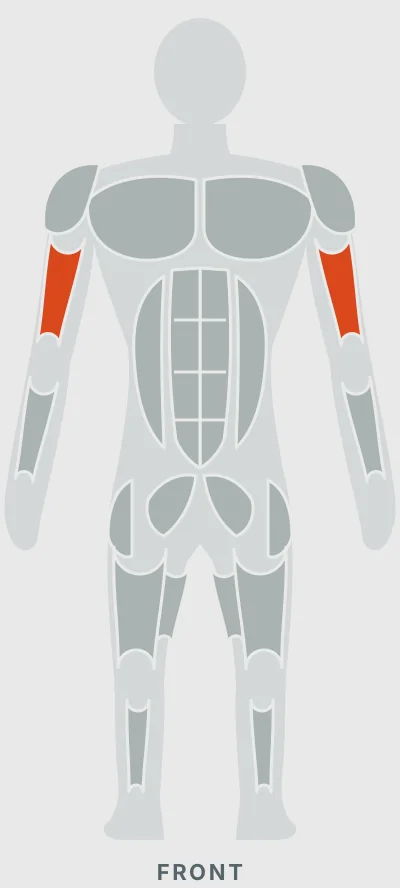
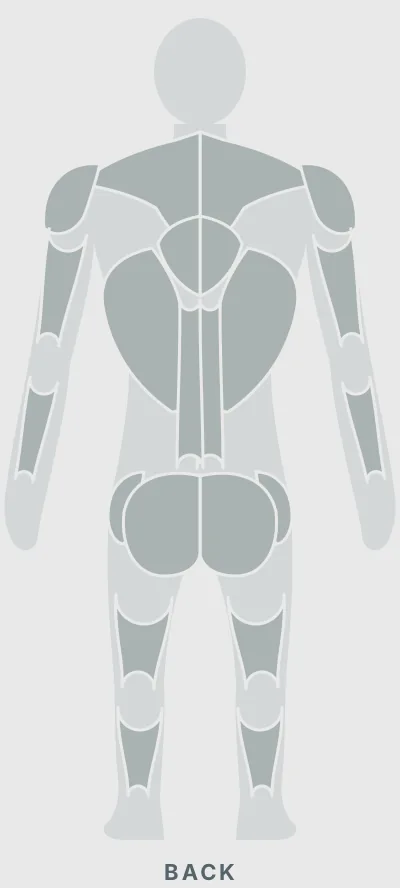
biceps
Red marks the muscles doing the work; amber the assisting ones. Same body for every exercise, so guides compare at a glance.
COMMON MISTAKES3
- Swinging the body or the elbows forward to lift the weight. Momentum and the shoulders do the work instead of the biceps. Fix: Keep your elbows pinned at your sides and your trunk still; use less weight.
- Dropping the weight back down. Fix: Lower over 2 to 3 seconds; the lowering half builds the muscle too.
- Swinging the upper arms forward to help. Fix: Keep the upper arms pointing at the floor; use lighter dumbbells.
SAFETY1
- Keep your wrists straight; do not let them bend back under the weight.
EQUIPMENT SETTINGS
- dumbbells Lighter than a standing curl.
- incline bench · bench angle: 45 to 60 degrees
RELATED EXERCISES
variants: alternating dumbbell curl
© 2026 Essomio LLC. The illustrations, muscle charts and guide text on this page are works of Essomio LLC, all rights reserved. They are for your personal use and may not be copied, redistributed or used to train models without written permission — see Licensing.