
abdominals
Plank
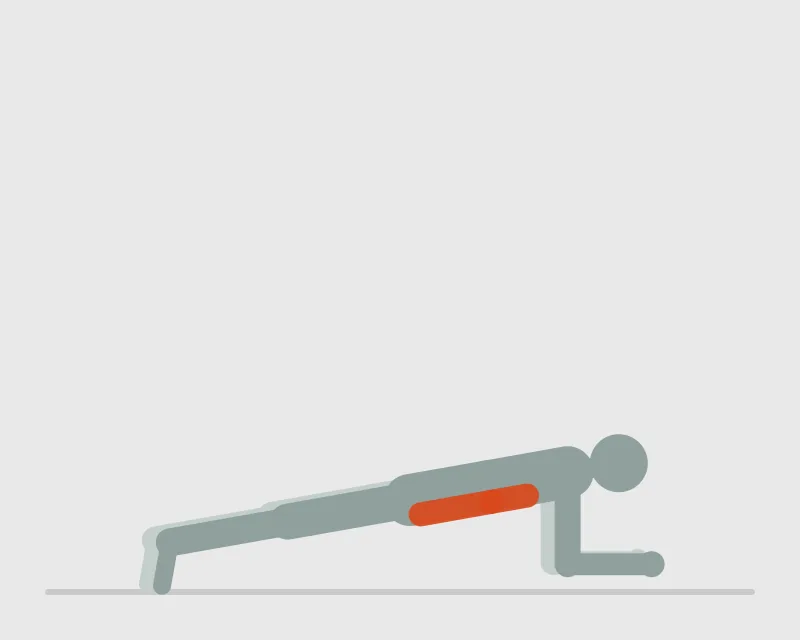
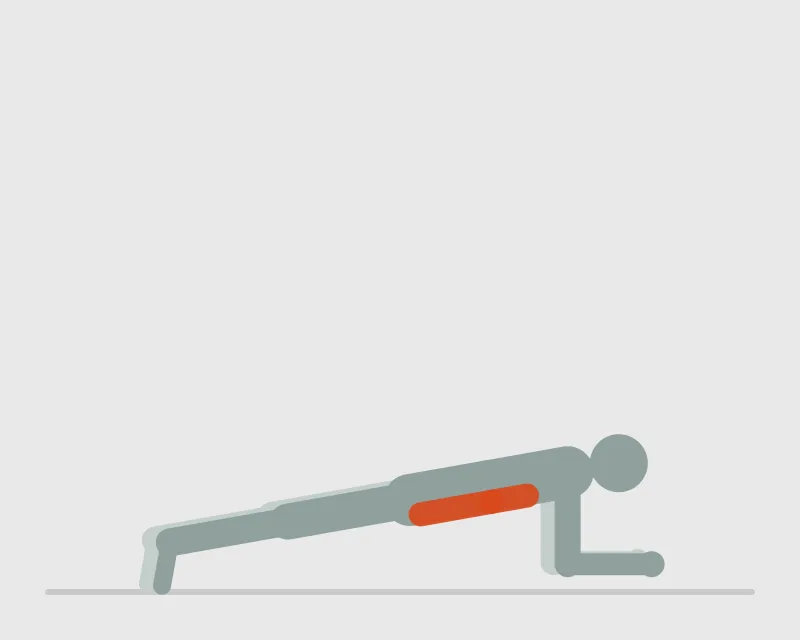
Resting on your forearms and toes, you hold your body in a straight line. Builds the deep muscles that keep your trunk steady.
beginnermat
BEFORE YOU START1
- Find a flat spot.
HOW TO DO IT
Get into position
- Lie face down and put your forearms on the floor, elbows under your shoulders.
- Tuck your toes under and lift your hips into a straight line from head to heels.
- Tighten your stomach and squeeze your buttocks.
- Look at the floor so your neck stays in line.
Check: Your body is one straight line from head to heels, your elbows are under your shoulders, and your hips are neither sagging nor sticking up.
Hold · hold 20 to 60 seconds
- Hold the position, breathing steadily. Keep squeezing your buttocks and stomach; the moment they relax the hips drop.
Check: You are still breathing normally and your hips have stayed level with your shoulders for the whole hold.
That is one set. Rest, then repeat. Stop the hold as soon as your hips start to sag; a shorter perfect hold beats a long sloppy one.
Breathe slowly and steadily for the whole hold; do not hold your breath.
MUSCLES WORKED
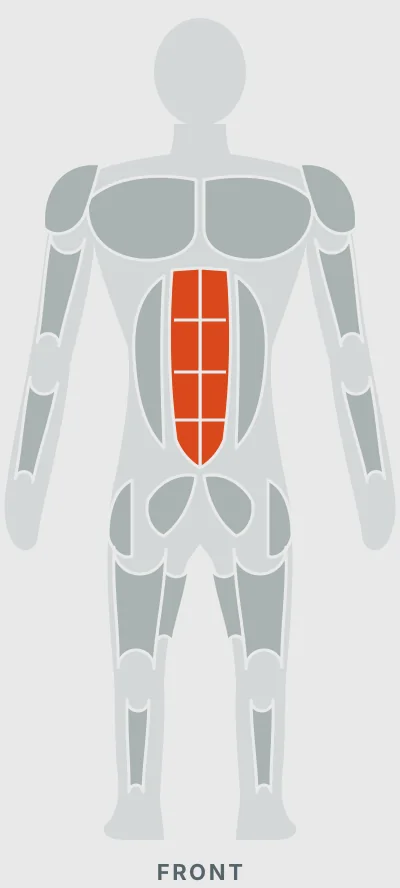
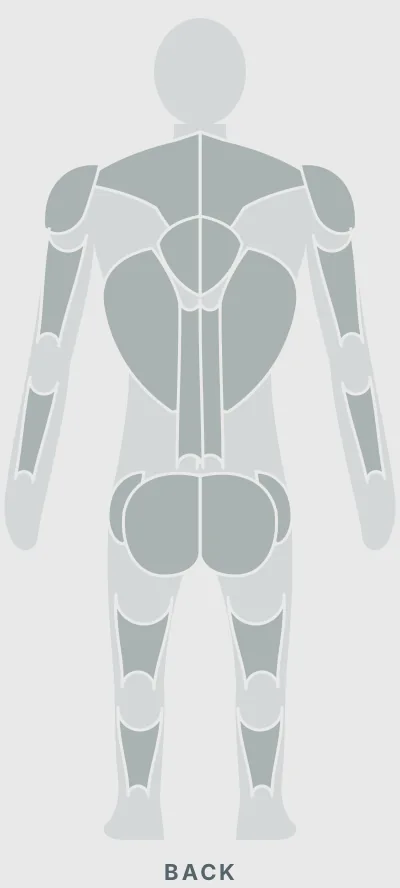
abs
Red marks the muscles doing the work; amber the assisting ones. Same body for every exercise, so guides compare at a glance.
COMMON MISTAKES4
- Hips sagging toward the floor. Strains the lower back. Fix: Squeeze your buttocks and stomach harder, or end the hold.
- Hips sticking up in the air. Fix: Lower them until your body is a straight line.
- Holding your breath. Fix: Breathe slowly and steadily the whole time.
- Looking up, with the neck bent back. Fix: Look at the floor just in front of your hands.
SAFETY2
- Drop to your knees to make it easier.
- Stop if you feel it in your lower back rather than your stomach.
RELATED EXERCISES
harder: plank get ups, side lying hip raise
variants: push ups
© 2026 Essomio LLC. The illustrations, muscle charts and guide text on this page are works of Essomio LLC, all rights reserved. They are for your personal use and may not be copied, redistributed or used to train models without written permission — see Licensing.