legs
Squat
With a barbell across your upper back, you sit down until your thighs are level with the floor and stand back up. The main leg exercise.
intermediatebarbellsquat rackplates
BEFORE YOU START3
- Set the rack hooks at about collarbone height.
- Set the safety bars just below where the bar will be at the bottom of your squat.
- Load the same weight on each side and clip the plates on.
HOW TO DO IT
Get into position
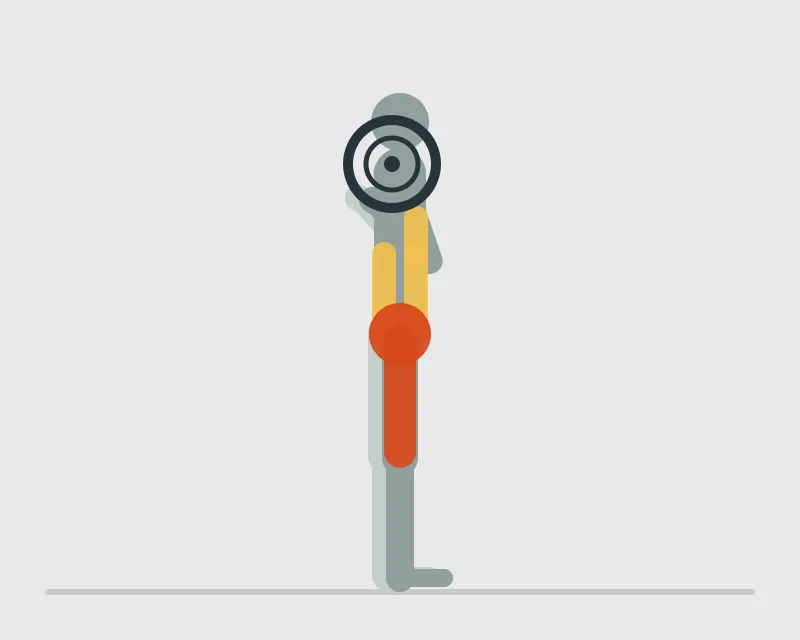
- Step under the bar and rest it on the thick muscle at the top of your back. Not on the bony part of your neck.
- Grab the bar on both sides, a little wider than your shoulders.
- Stand up to lift the bar off the hooks.
- Take two small steps back.
- Set your feet shoulder-width apart with your toes turned slightly out.
- Look straight ahead and tighten your stomach muscles.
Check: You are standing tall, the bar is steady on your upper back, and your feet are flat with your weight spread over the whole foot.
Sit down
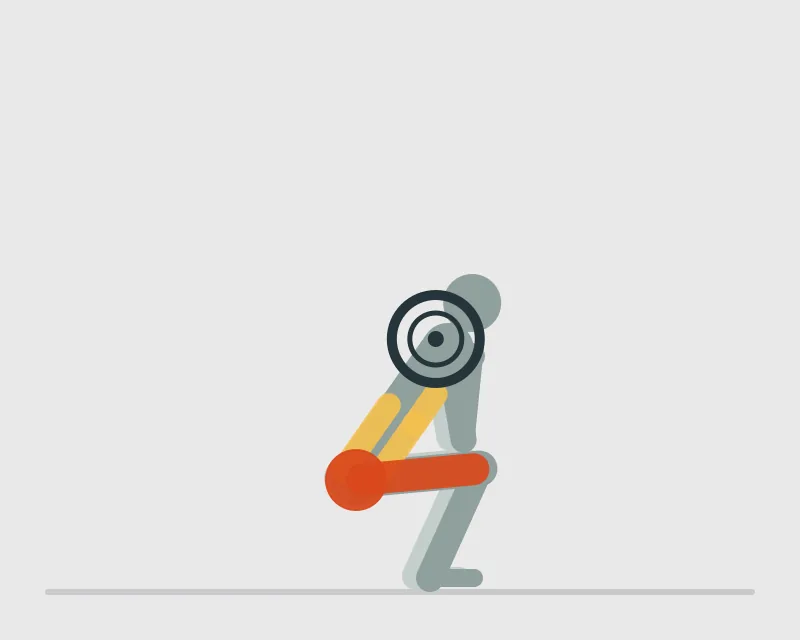
- Push your hips back and bend your knees at the same time, as if sitting into a chair.
- Keep your chest up and your back straight all the way down. Your chest tilts forward a little; that is normal. Your back should not round.
- Keep your knees pointing the same way as your toes.
- Stop when your thighs are level with the floor.
Check: Your thighs are parallel to the floor, your heels are flat, your knees point over your toes, and the bar is still above the middle of your feet.
Stand up
- Push the floor away through your whole foot to stand up. Drive your hips and shoulders up at the same speed so your chest stays up.
- Squeeze your buttocks at the top and stand tall.
Check: You are standing tall again, in the same spot, with the bar steady.
That is one rep. Repeat for your set, then walk forward until the bar touches the rack posts and lower it onto the hooks.
Breathe in and brace before you go down; lower for 2 to 3 seconds; breathe out as you stand up in about 1 second.
MUSCLES WORKED
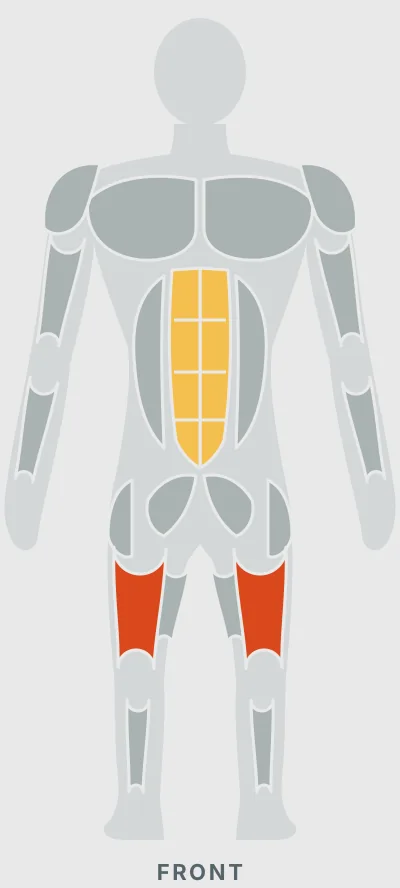
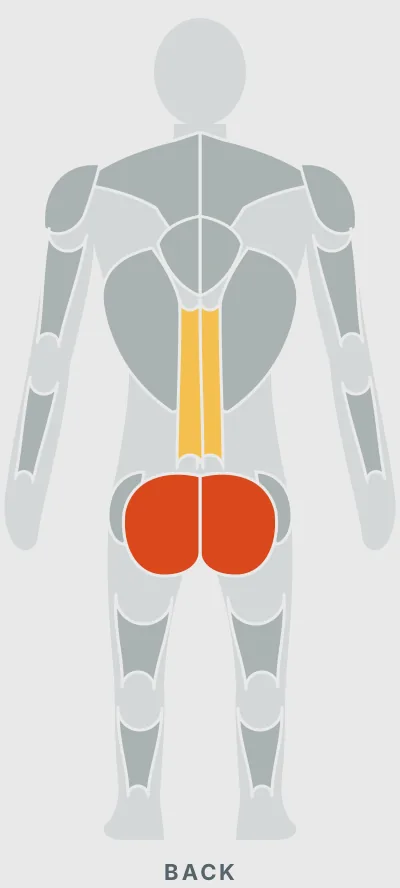
quadsglutesabslower back
Red marks the muscles doing the work; amber the assisting ones. Same body for every exercise, so guides compare at a glance.
COMMON MISTAKES5
- Knees caving in toward each other. Strains the knee joints and weakens the lift. Fix: Push your knees out so they stay in line with your toes.
- Heels lifting off the floor. You tip forward onto your toes and lose balance. Fix: Keep your weight over the middle of your feet; try a slightly wider stance or elevate your heels on small plates.
- Rounding the lower back at the bottom. Loads the spine instead of the legs. Fix: Stop a little higher until you can go deeper with a straight back.
- Hips shooting up first so the chest drops. Turns the squat into a back lift. Fix: Lead with your chest; think of your hips and shoulders rising together.
- Bar resting on the neck bone. Painful and can injure the neck. Fix: Lower the bar slightly onto the thick muscle across your upper back and pull your shoulder blades together to make a shelf for it.
SAFETY3
- Always squat inside a rack with the safety bars set, so you can set the bar down if you get stuck.
- Start with an empty bar until you can reach parallel with a straight back.
- If you are new to this lift, ask a trainer to watch your first few sets.
EQUIPMENT SETTINGS
- squat rack · hook height: bar at about the height of your collarbone, so you dip slightly to get under it · safety bars: just below the lowest point your bar reaches
- plates Same weight on both sides, clipped on.
RELATED EXERCISES
easier: bodyweight squat, dumbbell goblet squat, leg press
harder: front squat, barbell bulgarian split squat
variants: hack squat, medicine ball squat
© 2026 Essomio LLC. The illustrations, muscle charts and guide text on this page are works of Essomio LLC, all rights reserved. They are for your personal use and may not be copied, redistributed or used to train models without written permission — see Licensing.