
shoulders
Two-Handed Dumbbell Front Raise
A front raise holding one dumbbell with both hands, which keeps the movement steady and the arms together.
beginnerdumbbells
BEFORE YOU START1
- Pick one light dumbbell.
HOW TO DO IT
Get into position
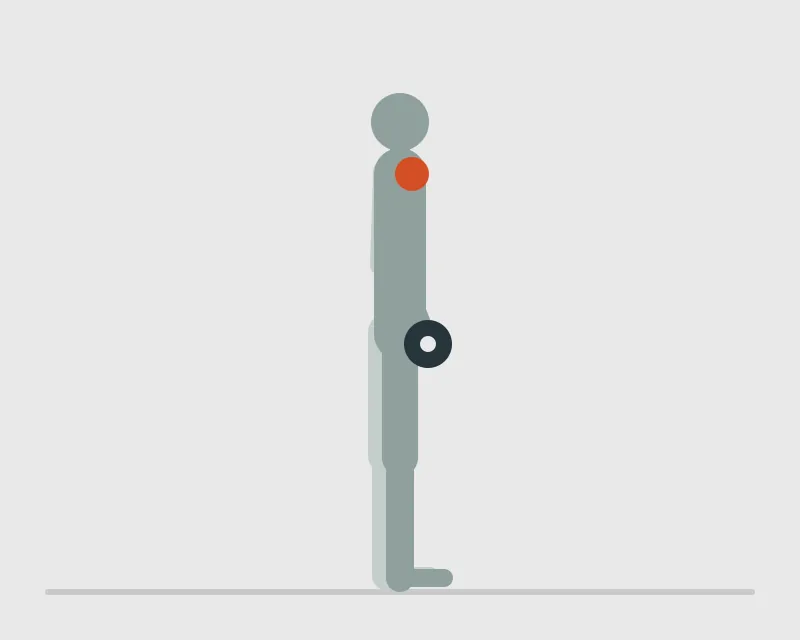
- Stand tall with your feet hip-width apart.
- Hold one dumbbell by its ends with both hands in front of your thighs.
Check: You are standing tall holding the dumbbell with both hands against your thighs.
Raise
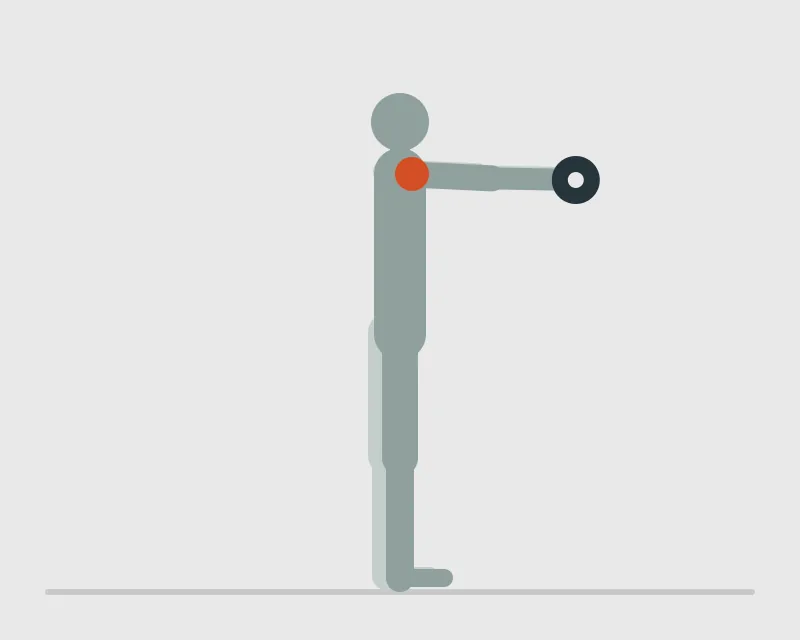
- Raise the dumbbell straight out in front until it is level with your shoulders.
- Pause for a second at the top.
Check: Your arms are straight out in front at shoulder height, elbows slightly bent, and your trunk is upright.
Lower slowly
- Lower the weight slowly back to the start.
Check: The weight is back at the start and your trunk has not moved.
That is one rep. Repeat for your set.
Breathe out as you raise in about 1 second; pause; breathe in as you lower over 2 seconds.
MUSCLES WORKED
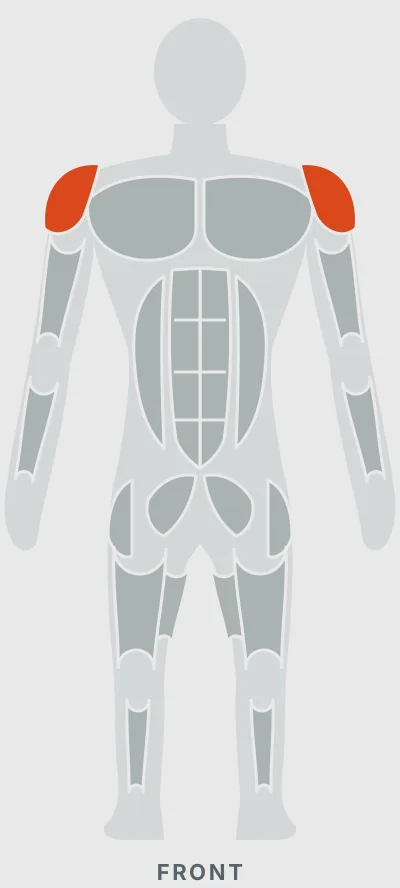
front delts
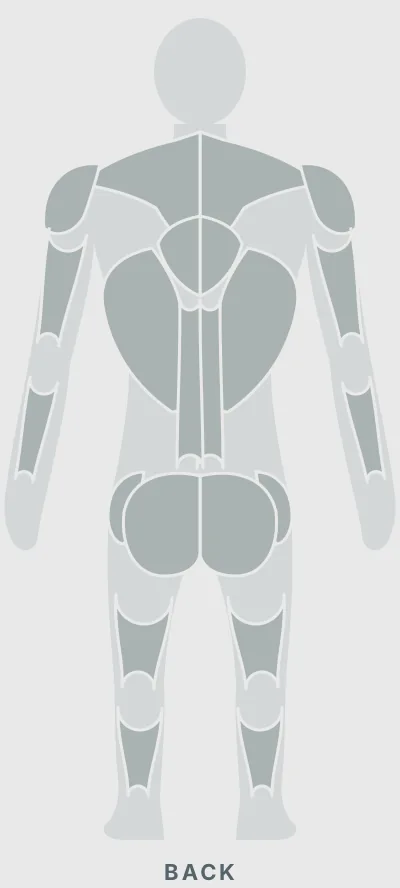
Red marks the muscles doing the work; amber the assisting ones. Same body for every exercise, so guides compare at a glance.
COMMON MISTAKES2
- Swinging the weight up with the body. Momentum, not the shoulder, lifts the weight. Fix: Stand still; if you have to rock, the weight is too heavy.
- Shrugging the shoulders up toward the ears. Fix: Keep your shoulders down; lift with the arm, not the neck.
SAFETY2
- Use light weights; the shoulder muscles are small.
- Stop at shoulder height; going higher pinches the shoulder.
EQUIPMENT SETTINGS
- dumbbells One, light.
RELATED EXERCISES
variants: dumbbell front raise
© 2026 Essomio LLC. The illustrations, muscle charts and guide text on this page are works of Essomio LLC, all rights reserved. They are for your personal use and may not be copied, redistributed or used to train models without written permission — see Licensing.